




A research initiative on oleo-thermic treatment (OTT) to add value to fast-grown, low-value secondary wood species through an environmentally conscious wood modification approach.
Fast-grown plantation wood from trees outside forests is increasingly supplying raw material to India's wood-based industries. However, its properties can be inferior to forest-grown wood.
This study was funded by Asia Pacific Association of Forestry Research Institutions ( APAFRI) Malaysia. The study explores high-temperature wood modification using vegetable oils to improve dimensional stability and resistance to biological threats while minimizing concerns associated with persistent toxic chemicals. The treatment can also produce a darker and more uniform wood colour.
Species: Radiata pine, Melia dubia and Rubber wood.
Temperature: 160–220°C
Oils: Linseed oil and palm oil, including fresh, heated and waste oils.
Hot oil treatment reduced water absorption and improved dimensional stability in radiata pine, while producing a darker, more uniform warm-brown colour. Higher treatment intensity may reduce strength and stiffness; therefore, treatment conditions require optimization for the intended application.
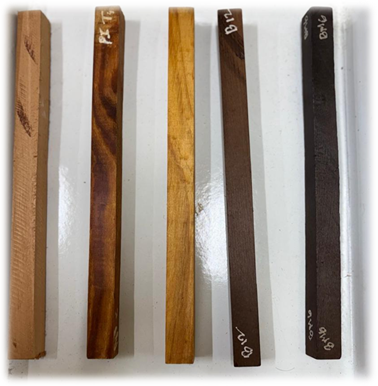
Melia dubia (160-200 °C )
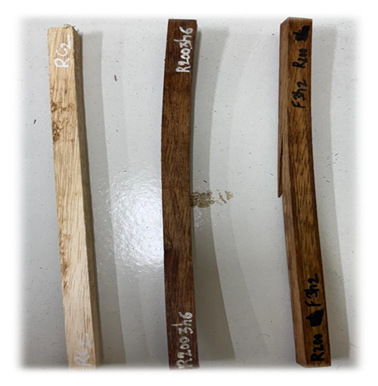
Hevea brasiliensis (200°C )
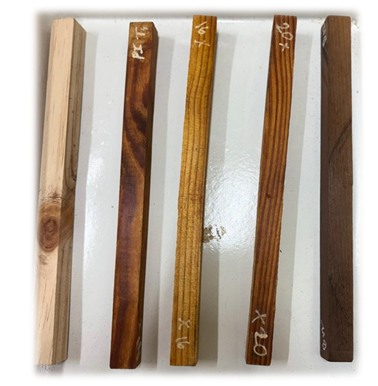
Pinus radiata (160-200 °C )
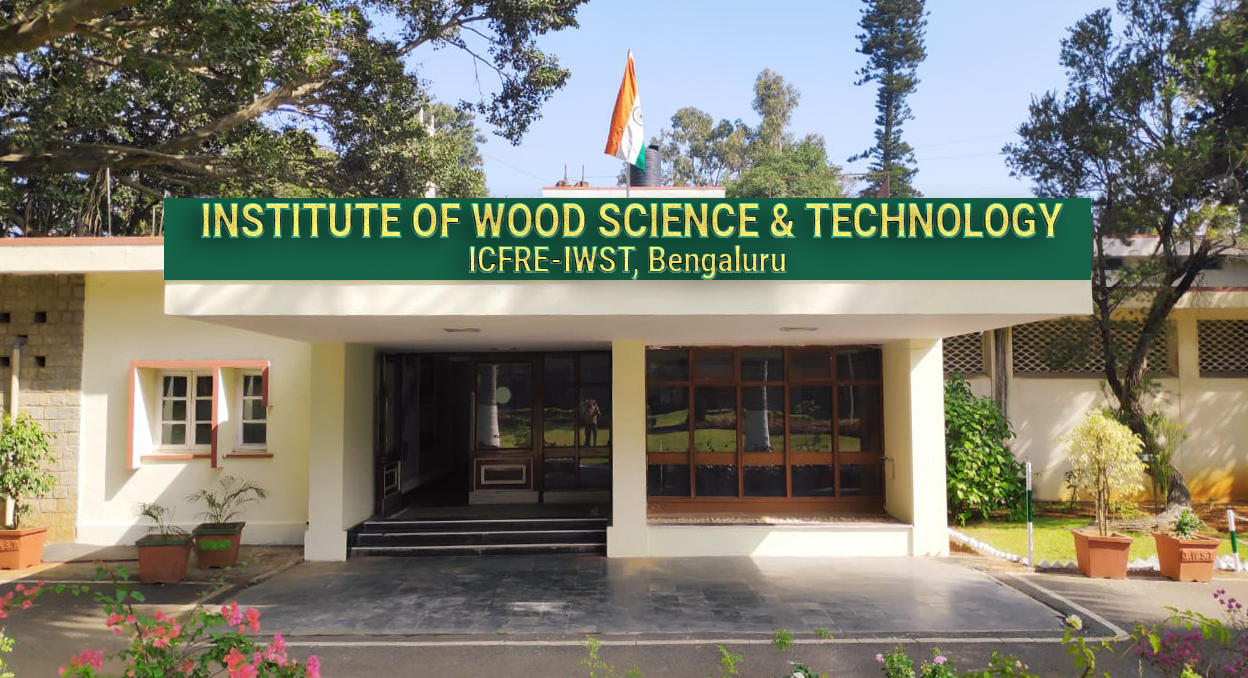
The Government of Mysore had set up a Forest Research Laboratory (FRL) at Bangalore in 1938. In the initial years, work was carried out mainly on properties and uses of different timber species.!